
If you are comparing insulated water lines with standard pipes, I would choose insulation for areas exposed to heat loss, condensation, or freezing. Standard pipes can still work well in protected indoor spaces, so the better option depends on your climate, pipe location, and priorities.
What Are Insulated Water Lines?
Insulated water lines are ordinary water supply pipes covered with a layer of material that slows the movement of heat. Common materials include flexible foam sleeves, fiberglass, polyethylene, and neoprene. The pipe itself may be copper, plastic, or another approved plumbing material. Insulation is added around the pipe rather than replacing it.
Standard pipes do not have this extra thermal layer. Their temperature changes more quickly in a cold crawl space, hot attic, garage, exterior wall, or other unconditioned area.
How They Compare in Daily Use
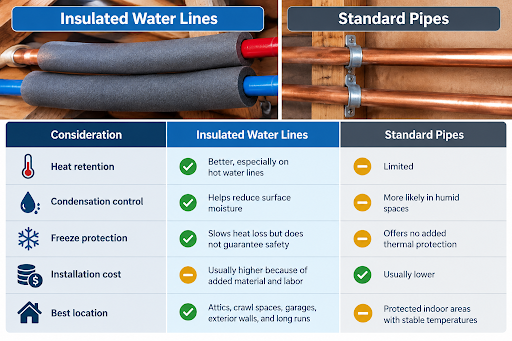
The most noticeable difference is temperature retention. Insulated hot water lines lose heat more slowly as water travels from the heater to a faucet. This can reduce the wait for warm water and limit the amount of water wasted while someone waits. Insulation can also help cold water remain cooler when pipes run through a warm space.
Standard pipes are more exposed to surrounding temperatures. In a stable, conditioned room, that may not matter much. In an attic or unheated basement, however, water temperature can change quickly. The pipe may also collect condensation when cold water travels through warm, humid air.
The Benefits of Insulated Water Lines
Energy efficiency is one reason people insulate plumbing. Guidance from the U.S. Department of Energy’s Building America program, published through the Pacific Northwest National Laboratory, reports that heat loss from uninsulated hot water distribution pipes can represent 16 to 23 percent of distribution energy use, depending on climate. It also states that adding about three-quarters of an inch of pipe insulation can reduce overall water heating energy use by about 4 to 5 percent annually. Results vary by home, pipe length, and water use, but the principle is simple: keeping heat in the pipe reduces the work needed to heat replacement water.
Insulation can improve comfort as well. A hot water line that holds its temperature longer may deliver warm water more consistently, particularly when the water heater is far from the kitchen or bathroom.
Another advantage is moisture control. When cold pipes sit in humid air, water can form on their outer surface. Over time, dripping condensation may stain materials, encourage mold growth, or damage nearby wood and insulation. A suitable covering reduces the temperature difference between the pipe and surrounding air.
In cold regions, insulation can delay freezing. That extra time may protect a pipe during a brief cold spell, especially if indoor heat is still present. However, insulation does not create heat. A line exposed to prolonged freezing temperatures can still freeze and burst. The same PNNL guidance recommends considering thermostat-controlled heat tape for piping in unconditioned areas in freezing climates.
When Standard Pipes May Be Enough
Insulation is not necessary for every water line. A standard pipe inside a heated wall or conditioned utility room may face little risk from temperature changes. In that setting, adding insulation may provide only a modest benefit while making the installation more complicated.
Standard pipes can also be reasonable when space or budget is limited. Insulation takes up room around the pipe, which matters in crowded wall cavities or near fittings. A plumber must select material that suits the pipe temperature and environment. Insulation intended for ordinary water lines may not be suitable for high-temperature steam systems.
Even when standard pipes are used, good placement matters. PNNL advises avoiding water pipes in exterior walls and unheated attics when possible. If a pipe must pass through an exterior wall, the surrounding cavity should be insulated carefully, with as much insulation as possible between the pipe and outside surface.
Installation and Maintenance Considerations
Measure the pipe’s outside diameter and choose a sleeve that fits snugly. Close gaps at seams and joints, especially around elbows and valves. Secure the covering so it does not slide out of position.
Do not compress fiberglass insulation because compression reduces its effectiveness. If fiberglass is used where moisture is possible, it needs a suitable moisture barrier. Seal openings where pipes pass through walls, floors, and ceilings so cold air cannot move freely around the line.
Inspect insulated lines occasionally. Look for wet insulation, loose sections, damaged seams, or signs of leaks beneath the covering. Insulation should never hide an active plumbing problem. Repair the pipe first, then replace the covering after the area is dry.
So, Which Is Better?
Insulated water lines are better in vulnerable locations and on long hot water runs. They can reduce heat loss, control condensation, improve comfort, and slow freezing. Standard pipes remain suitable in protected areas where those risks are low.
The practical approach is not to insulate every pipe automatically. Identify lines that pass through cold, hot, damp, or unconditioned spaces. Insulate those areas properly, follow local requirements, and seek professional advice when pipes are hidden or exposed to severe weather.
If you have questions about your plumbing layout, contact us or visit our website at outdoorboiler.com for more information about choosing the right approach for your home.